
Table of Contents
- Creative elevator pitch examples for every scenario
- What is the Elevator Pitch?
- Why Use an Elevator Pitch
- Key Components of an Effective Elevator Pitch
- Perfect Elevator Pitch Examples (WinSlides Templates to Match)
- How to Write an Elevator Pitch
- Essential Do’s and Don’ts For Writing Elevator Speech
- Final Thoughts: Practice Makes Perfect
How to Write an Elevator Pitch: The Ultimate Step-by-Step Guide



Creative elevator pitch examples for every scenario
The average human attention span is now reportedly less than that of a goldfish—about 8 seconds. In a world of endless distractions, like Instagram reels, YouTube shorts, you don’t have time for long introductions. You need to hook your audience immediately, whether you are in a networking meeting, a job interview, or a Zoom breakout room.
“A Microsoft study revealed that since the year 2000, the average human attention span has dropped from 12 seconds to just 8 seconds. That means you officially have less time to hook your audience than a goldfish.”
Mastering the art of brevity isn’t just a skill; it’s a business survival tactic.
In short, what is an elevator pitch? An elevator pitch is a short, pre-prepared speech that explains your business or professional goals in less than one minute. Its primary goal is not to close a deal on the spot, but to intrigure the listener enough to continue the conversation after the pitch ends.
What is the Elevator Pitch?
An elevator pitch is a concise, persuasive speech typically lasting 30 to 60 seconds—short enough to be delivered during a single elevator ride. Its primary purpose is not to “close a sale” on the spot, but to spark interest, explain what your organization does, and communicate the unique value you bring to the listener.
The Concept: Your Verbal Business Card
Think of an elevator pitch as your verbal business card.
Physical business cards often get lost in wallets or tossed in the trash, but a well-crafted story sticks in the memory. It isn’t a monologue; it is a strategic tool designed to bridge the gap between a stranger and a business connection.
Why Use an Elevator Pitch
In a professional setting, the question “So, what do you do?” is inevitable. Without a pitch, you might ramble or miss an opportunity. With a pitch, you transform that casual question into an invitation for a deeper conversation. It turns a polite nod into the most important phrase in business: “Tell me more.”
Key Components of an Effective Elevator Pitch
To move a listener from curiosity to interest, your pitch needs structure. Every successful script is built on these five pillars:
- The Hook: An opening statement that grabs attention immediately (e.g., a surprising statistic or a relatable question).
- The Problem: A clear identification of the pain point or challenge your target audience is facing.
- The Solution: A brief explanation of how you or your product specifically solves that problem.
- The Value Proposition: The unique benefit or result that sets you apart from the competition (your “secret sauce”).
- The Ask (Call to Action): A clear next step. You aren’t asking for money yet; you are asking for a connection (e.g., exchanging cards, scheduling a meeting, or connecting on LinkedIn).
Perfect Elevator Pitch Examples (WinSlides Templates to Match)
A great elevator pitch often leads to one specific outcome: the listener asks, “That sounds interesting—how exactly do you do that?” or “Can you send me your details?”
This is your moment to shine. Don’t just send a text-heavy email. Follow up with a professional visual that proves your expertise.
Below are three specific elevator pitch scenarios paired with the exact WinSlides templates you should use to seal the deal.
1. For the “Job Seeker” Pitch – Employee Profile Template
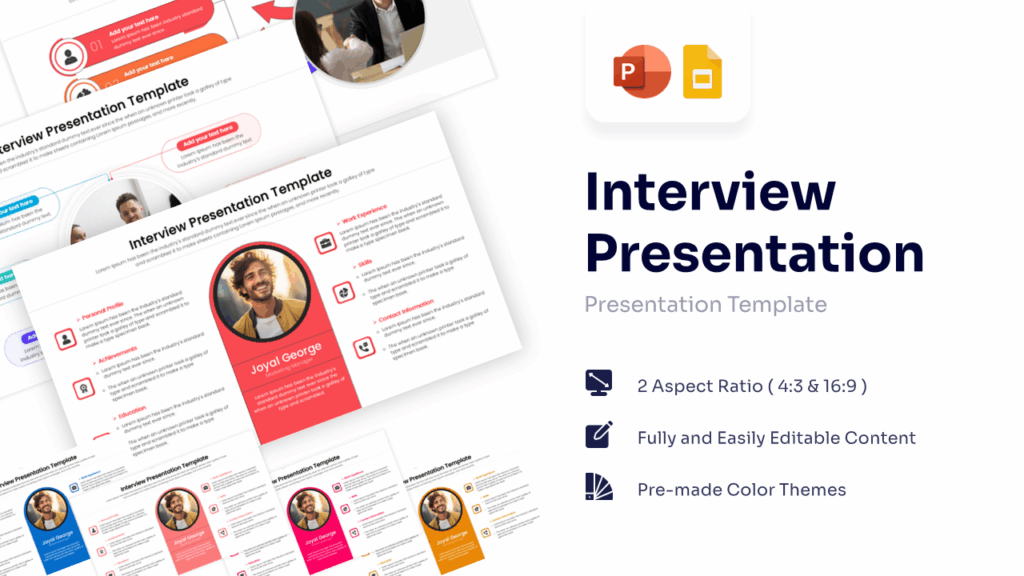
View: Employee Profile Interview Presentation Template
When you pitch yourself for a new role, promotion, or freelance gig, your verbal introduction is just the hook. To seal the deal, you need to leave behind something memorable that validates your claims. The Employee Profile Template transforms a standard text resume into a professional visual brand. It allows you to showcase your key skills, certifications, and career highlights in a clean, high-impact layout that instantly stands out to hiring managers and recruiters.
For the “Operations & Strategy” Pitch – Business Process Template
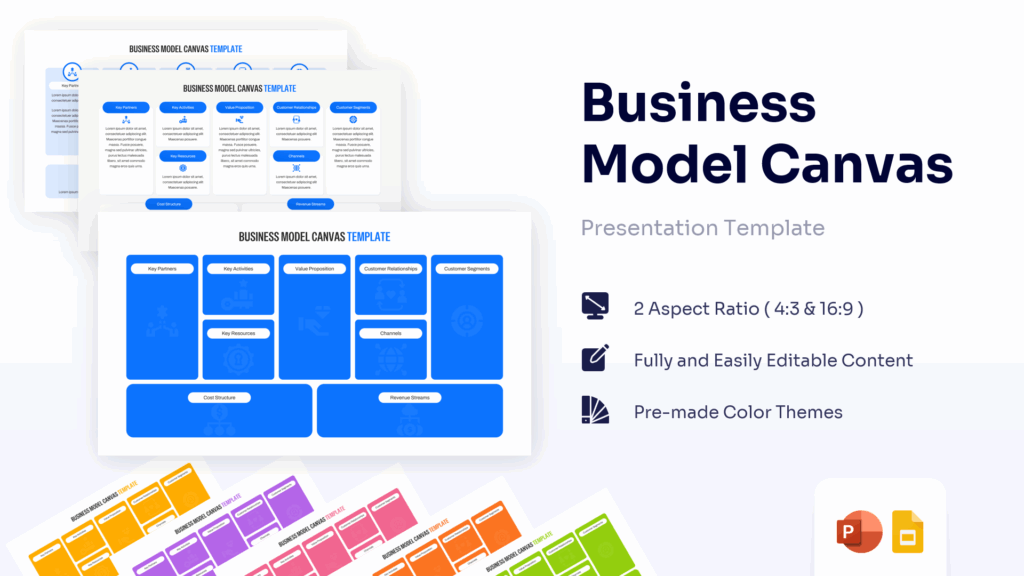
View: Business Model Canvas Template
If your pitch focuses on efficiency, optimization, or a unique service methodology, the client will immediately want to know how you achieve those results. Explaining a complex workflow verbally can be confusing. The Business Process Template is the perfect follow-up tool. It allows you to map out your strategy step-by-step, visually demonstrating your “secret sauce” and showing the prospect exactly how you will take them from their current problem to your promised solution.
For the “Marketing & Sales” Pitch – Customer Journey Template
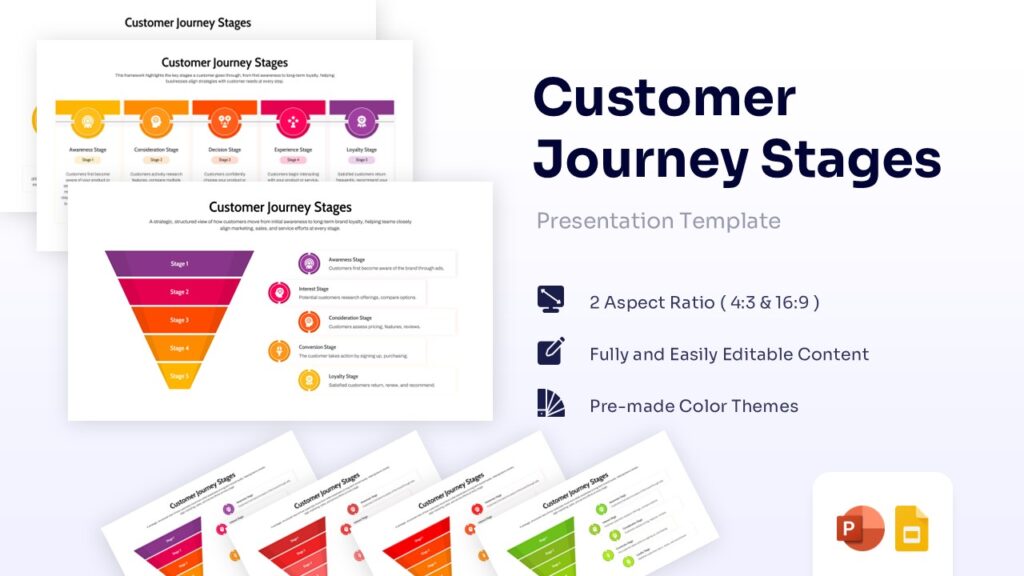
View: Customer Journey Map Template
For marketers, UX designers, and sales professionals, your pitch often revolves around improving the user experience or increasing retention. The best way to validate this pitch is to prove you understand the client’s audience. The Customer Journey Map Template helps you visualize every touchpoint, pain point, and opportunity in a user’s lifecycle. Sending this slide proves that your strategy is not just talk—it is grounded in data, empathy, and a deep understanding of the customer’s path to purchase.
How to Write an Elevator Pitch
Writing an effective pitch requires stripping away jargon and focusing on clarity. You don’t need to be a professional copywriter; you just need to follow a proven structure.
Follow these 5 steps to build a script that converts curiosity into conversation.
Step 1: Identify Your Goal
Before you write a single word, ask yourself: What is the purpose of this pitch? Are you looking for a job? Trying to win a freelance client? Pitching an investor? Your goal dictates your opening hook.
- Drafting Tip: Start by defining your role clearly.
- Example: “I am a [Job Title] who helps [Target Audience]…”
Step 2: State the Problem You Solve (The Hook)
Every good product or service exists to solve a specific pain point. To grab the listener’s attention, you need to articulate the problem they are already facing. This shows empathy and relevance.
- Drafting Tip: Start with a relatable phrase like, “You know how…” or “Many companies struggle with…”
- Example: “You know how many small businesses struggle to rank on Google because SEO is too complicated?”
Step 3: Introduce Your Solution
This is where you explain how you solve that problem. Be specific, but brief. Avoid buzzwords that might confuse someone outside your industry.
- Drafting Tip: Use simple verbs like “I provide,” “We build,” or “My team develops.”
- Example: “Well, my agency provides a clear, 3-step content strategy that simplifies the entire process.”
Step 4: Explain Your USP (Unique Selling Proposition)
Why you? What makes you different from the competition? This is your “secret sauce.” It could be a specific methodology, a unique technology, or a proven result (data wins here).
- Drafting Tip: Use a sentence that highlights a result.
- Example: “Unlike other agencies that focus on vanity metrics, we focus purely on revenue. In fact, we helped our last client double their leads in 90 days.”
Step 5: The Call to Action (The Ask)
Never leave the conversation hanging. The biggest mistake professionals make is delivering a great pitch and then… silence. Always end with a question or a clear next step.
- Drafting Tip: Be polite but direct.
- Example: “I’d love to share that case study with you. Do you have a business card?”
Essential Do’s and Don’ts For Writing Elevator Speech
Even the best script can fail if the delivery is off. An elevator pitch is a performance, not just a recitation. To ensure you make a lasting positive impression, keep these elevator pitch best practices in mind.
Elevator Pitch Best Practices (The Do’s)
- Do keep it under 60 seconds. Respect the listener’s time. Your goal is to deliver a short persuasive speech, not tell your entire life story. If they want to know more, they will ask. Aim for 75 to 100 words max.
- Do focus on the listener. Frame your elevator speech around their problems and how you can help them. The listener is subconsciously asking, “What’s in it for me?” Make sure you answer that clearly.
- Do practice until it sounds natural. Rehearse your pitch delivery enough so that you don’t stumble over your words, but keep the tone conversational. You want to sound prepared, not rehearsed.
- Do end with a specific question. Always invite engagement. Ending with “Do you have a business card?” or “I’d love to hear your thoughts on X” gives the listener an easy way to continue the conversation.
Common Elevator Pitch Mistakes (The Don’ts)
- Don’t speak too fast. Rushing through your lines is the number one sign of nervousness. It makes your elevator pitch difficult to understand and hurts your credibility. Take a breath, pause, and speak at a conversational pace.
- Don’t use industry jargon. Avoid buzzwords like “synergy,” “paradigm shift,” or complex technical acronyms. If a 10-year-old cannot understand your business introduction, it is too complicated.
- Don’t sound like a robot. Memorizing your script word-for-word without emotion makes you sound inauthentic. It is better to memorize your key bullet points and let the specific words flow naturally.
- Don’t leave the conversation hanging. The worst way to end a pitch is with awkward silence. Never walk away without establishing a clear next step or action item.
Final Thoughts: Practice Makes Perfect
Writing a great elevator pitch isn’t about memorizing a script perfectly; it is about having the confidence to share your value in any situation. Whether you are in a high-stakes investor meeting or a casual networking mixer, the goal remains the same: to move from a stranger to a connection.
Remember, the best pitches don’t sound like “pitches” at all—they sound like natural, interesting conversations.
Key Takeaways to Remember:
- Keep it brief: You have less than 60 seconds to make an impact.
- Focus on the problem: People care about solutions to their pain points, not just your job title.
- Always have an “Ask”: Never let a good conversation end without a clear next step.
The only way to get comfortable with your pitch is to say it out loud. So, draft your script using the steps above, stand in front of a mirror, and start practicing. Your next big opportunity could be just one elevator ride away.
Good luck!
Related Blogs
-

Best Pitch Deck Examples from Successful Startups (Free Templates)
The 90% Rule – Why Most Pitch Deck Fails to Get a Second Look For any startup to make their business successful, they need funding to fuel growth, hiring, and market expansion. A brilliant idea is only half the battle; transforming that idea into a scalable business requires significant capital. Yet, securing that vital seed…
-

11 Best Alternative to Slidesgo for PowerPoint and Google Slides Templates
Slidesgo Alternative You Shouldn’t Miss in 2026 For most presenters, when searching for the best free presentation templates, one name instantly strikes the mind: ”Slidesgo.” Today Slidesgo has firmly established itself as a crowd favorite—the absolute go-to for students, teachers, and creatives hunting for fun, illustrated Google Slides themes. Their platform is practically synonymous with…